Java 例 - スレッド状態の取得
Java スレッドのライフサイクルにおいて、Thread クラスには列挙型 State があり、スレッドのいくつかの状態を定義しています。それぞれ次のとおりです:
- New
- Runnable
- Blocked
- Waiting
- Timed Waiting
- Terminated
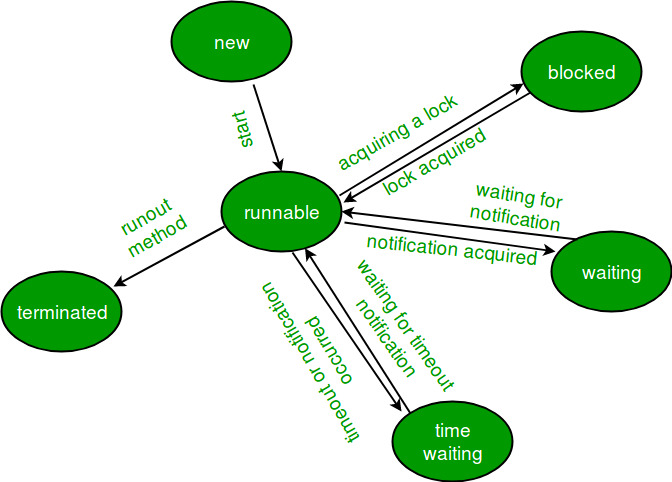
各状態の説明:
1. 初期状態 - NEW
説明:
public static final Thread.State NEW
Runnable インターフェースを実装し、Thread を継承すると、スレッドクラスを得ることができます。new でインスタンスを生成すると、スレッドは初期状態に入ります。
2. RUNNABLE
説明:
public static final Thread.State RUNNABLE
2.1. 実行可能状態
実行可能状態とは、単に実行する資格があることを意味します。スケジューラがあなたを選択しなければ、永遠に実行可能状態のままです。
スレッドの start() メソッドを呼び出すと、このスレッドは実行可能状態に入ります。
現在のスレッドの sleep() メソッドが終了した場合、他のスレッドの join() が終了した場合、ユーザーの入力を待ち終えた場合、あるスレッドがオブジェクトロックを取得した場合、これらのスレッドも実行可能状態に入ります。
現在のスレッドのタイムスライスが使い切られた場合、または現在のスレッドの yield() メソッドが呼び出された場合、現在のスレッドは実行可能状態に入ります。
ロックプール内のスレッドは、オブジェクトロックを取得した後、実行可能状態に入ります。
2.2. 実行中状態
スレッドスケジューラが実行可能プールから1つのスレッドを現在のスレッドとして選択したときの状態です。これがスレッドが実行状態に入る唯一の方法でもあります。
3. ブロック状態 - BLOCKED
説明:
public static final Thread.State BLOCKED
ブロック状態は、スレッドが synchronized キーワードで修飾されたメソッドまたはコードブロック(ロックの取得)に入るときにブロックされている状態です。
4. 待機 - WAITING
説明:
public static final Thread.State WAITING
この状態にあるスレッドには CPU 実行時間が割り当てられず、明示的に起こされるのを待つ必要があります。そうしないと、無期限に待機し続ける状態になります。
5. タイムアウト待機 - TIMED_WAITING
説明:
public static final Thread.State TIMED_WAITING
この状態にあるスレッドには CPU 実行時間が割り当てられませんが、他のスレッドに明示的に起こされるのを無期限に待つ必要はなく、一定時間に達すると自動的に起きます。
6. 終了状態 - TERMINATED
説明:
public static final Thread.State TERMINATED
スレッドの run() メソッドが完了したとき、またはメインスレッドの main() メソッドが完了したとき、そのスレッドは終了したと見なされます。このスレッドオブジェクトは生きているかもしれませんが、単独で実行されるスレッドではなくなっています。スレッドはいったん終了すると、再び生き返ることはできません。
終了したスレッドで start() メソッドを呼び出すと、java.lang.IllegalThreadStateException 例外がスローされます。
次の例は、スレッドの状態を取得する方法を示しています:
Main.java ファイル
上記のコードを実行した出力結果は次のとおりです:
State of thread1 after creating it - NEW State of thread1 after calling .start() method on it - RUNNABLE State of thread2 after creating it - NEW State of thread2 after calling .start() method on it - RUNNABLE State of thread2 after calling .sleep() method on it - TIMED_WAITING State of thread1 while it called join() method on thread2 -WAITING State of thread2 when it has finished it's execution - TERMINATEDその他の拡張